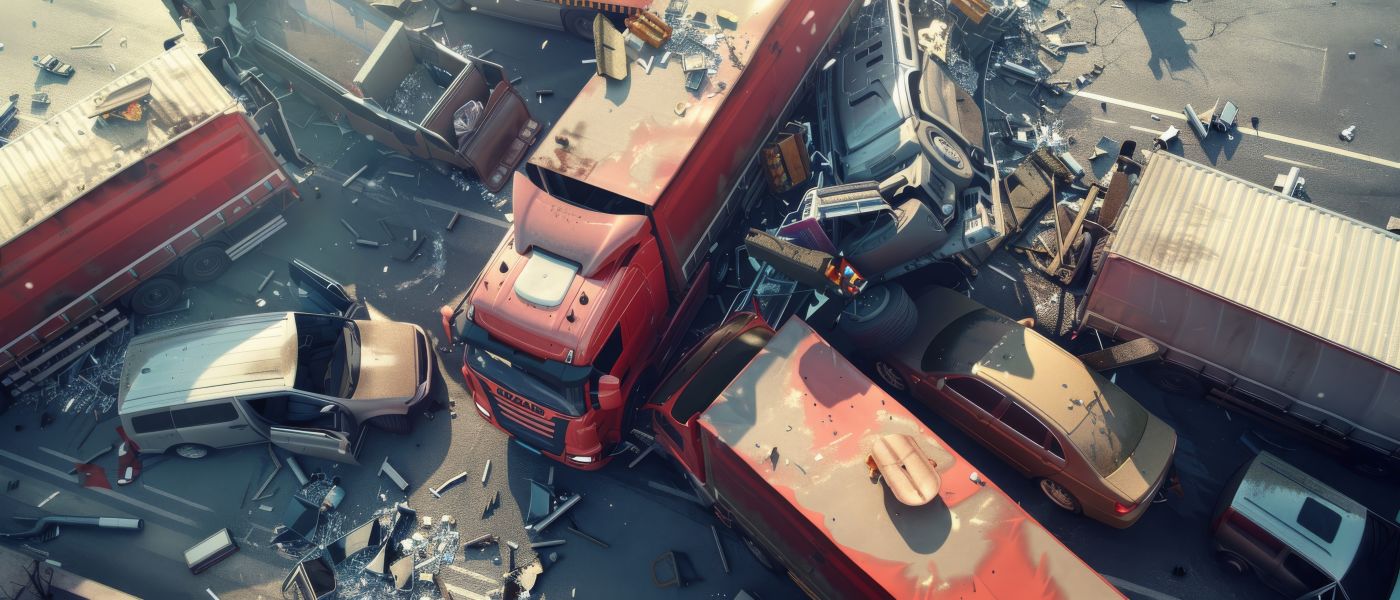
When a commercial truck crashes into a passenger vehicle, the aftermath is chaotic and confusing. Unlike a standard car fender-bender, a collision with an 18-wheeler involves massive corporate entities, aggressive insurance adjusters, and federal regulations.
Trucking companies often have teams of investigators on the scene within hours. To level the playing field, it's important to engage an experienced legal team that can help you gather key evidence to support your claim and pursue fair compensation for your injuries and damages.
Located in Overland Park, Kansas, the attorneys at Harris & Hart Attorneys at Law have over 50 years of combined experience in insurance litigation and appeals. They have handled more than 10,000 cases, and they are committed to helping you understand exactly what evidence is needed to build a strong claim and how their attorneys can help you secure it before it disappears.
Immediate Evidence Collection at the Scene
The moments following a trucking accident are stressful, but they are also the most vital for preserving the facts of what happened. If it is safe to do so, gathering physical evidence immediately lays a foundation for your entire case. Memories fade, and rain can wash away physical evidence, so it's essential to document the scene as soon as possible.
Visual Documentation
Using a camera or your phone, take wide shots that show the positioning of both vehicles relative to the lanes. Capture close-up photos of the damage to the passenger vehicle and the semi-truck. Look for details that might explain why the crash happened. Are the truck’s tires bald? Is there cargo spilled on the road? Is a stop sign obscured by an overgrown bush?
Video evidence is also effective. A slow 360-degree walk around the scene can capture spatial relationships that photos might miss. Narrate the video if possible, pointing out weather conditions, traffic flow, and any road hazards.
Witness Information
Bystanders often see things the drivers involved do not. A witness might have seen the truck swerving miles before the impact or noticed the driver looking at a phone. Collect the names, phone numbers, and addresses of anyone who stopped or witnessed the accident. Ask if they are willing to provide a statement later. Independent accounts are often seen as more credible than the accounts of the drivers involved.
The Police Report
Law enforcement officers will create an official record of the accident. They will interview the drivers, sketch the scene, and initially determine whether any traffic laws were broken. While the police report itself is not always the final word on fault, it serves as a primary reference point for insurance companies. Always request the report number and ask the officer how to obtain a copy once it is filed.
Securing Electronic Evidence: The "Black Box"
Modern commercial trucks are rolling computers. They contain electronic control modules (ECMs), often referred to as "black boxes." These devices record data regarding the truck's operation in the seconds leading up to a crash. This data is hard for a regular driver to access, but it is often the smoking gun in a lawsuit. The ECM can reveal the following data about the truck:
Speed: Was the driver speeding at the time of impact?
Braking: Did the driver hit the brakes, and if so, how hard and how soon before the crash?
RPMs and throttle: Was the driver accelerating?
Hours of operation: How long had the engine been running?
This data is volatile. If the truck is repaired or returned to service, the data can be overwritten or lost forever. The attorneys at Harris & Hart Attorneys at Law will move quickly to send spoliation and preservation letters to trucking companies, legally demanding that they save this data.
Driver Logs and Electronic Logging Devices (ELDs)
Fatigue is a major killer on U.S. highways. To combat this, the Federal Motor Carrier Safety Administration (FMCSA) enforces strict Hours of Service (HOS) rules. These rules dictate how long a driver can be behind the wheel without a break.
In the past, drivers used paper logbooks, which were easy to falsify. Today, most carriers must use electronic logging devices (ELDs). These devices automatically record the vehicle's driving time. Comparing ELD data with black box data and gas station receipts can often reveal whether a driver was working longer than legally allowed. If a driver was tired and violated federal safety rules, the trucking company may face significant liability.
Corporate and Maintenance Records
The responsibility for a crash often extends beyond the driver in the cab. The trucking company itself may have cut corners to save money. Gathering evidence from the company's internal files helps determine if systemic negligence played a role.
Hiring and Training Files
Did the company hire a driver with a history of DUIs or reckless driving? Did they fail to provide proper training on how to handle the vehicle in bad weather? Personnel files can show whether the company ignored red flags during the hiring process.
Maintenance and Inspection Logs
Trucks require rigorous maintenance. Brakes wear out, lights fail, and tires degrade. Federal law requires carriers to systematically inspect, repair, and maintain their fleets. If a brake failure caused the accident, maintenance logs will show whether the company skipped required inspections or ignored a mechanic’s recommendation to replace a part. Proving that a company knowingly put an unsafe vehicle on the road is a powerful way to support your claim.
Kansas and Missouri Laws for Trucking Accidents
Harris & Hart Attorneys at Law serves the greater Kansas City area and frequently handles cases that cross state lines. The laws in Kansas and Missouri differ significantly, and knowing these differences will affect how evidence can be used.
Kansas Laws
In Kansas, the statute of limitations for personal injury cases generally gives victims two years from the date of the crash to file a lawsuit. Kansas follows a "modified comparative fault" rule. This means that if a victim is found to be 50% or more at fault for the accident, they cannot recover any damages. This makes gathering evidence to prove the truck driver was primarily responsible absolutely vital.
Missouri Laws
Missouri typically allows five years to file a personal injury lawsuit, though it is never wise to wait that long, as evidence can disappear. Missouri uses a "pure comparative fault" system. Under this rule, a victim can recover damages even if they are 99% at fault, though the compensation is reduced by their percentage of fault. While this sounds more lenient, insurance companies in Missouri will still fight hard to shift as much blame as possible onto the victim to reduce payouts.
Trucking Accident Attorneys Serving Kansas and Missouri
If you've been injured in a collision with a semi-truck, experienced legal representation can help you file a strong claim and advocate for the compensation you need. Harris & Hart Attorneys at Law will work with you to investigate your case thoroughly and build a solid plan of action.
Located in Overland Park, Kansas, the firm serves clients throughout the Kansas City metro area and throughout both Kansas and Missouri. With decades of trial-tested success, they have the skill to pursue fair results. Reach out today to schedule an initial consultation.